
Image : Purely Representational Purpose Only
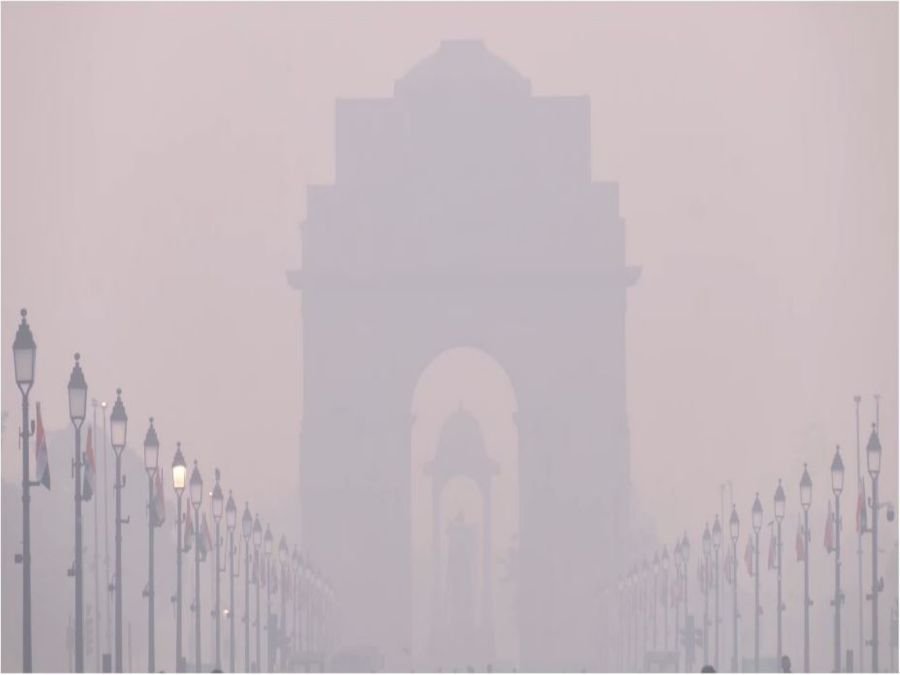
With air quality in Delhi-NCR deteriorating to the “Poor” category, the Commission for Air Quality Management (CAQM) has invoked Stage I of the Graded Response Action Plan (GRAP) with effect from Wednesday (October 21). Delhi’s Air Quality Index (AQI) rose sharply to 244 on October 21.
GRAP is a set of emergency measures that kick in to prevent further deterioration of air quality once it reaches, or is forecast to reach a certain threshold in the Delhi-NCR region. Under GRAP Stage I, authorities are directed to strengthen dust-mitigation measures and enforce existing rules governing construction and demolition activities, waste management and other pollution sources. The schedule also includes measures concerning vehicle emissions, diesel generator sets, public transport, industrial emissions and the use of coal and firewood in tandoors.
A few progressive measures have been announced by Delhi Chief Minister Rekha Gupta. Vehicles below BS-VI emission standards registered outside Delhi will not be allowed to enter the national capital from November 1 to January 31 as part of the government’s measures to combat winter pollution.
In a post on X, Gupta said the Delhi government’s Winter Action Plan would remain in force from November 1 to February 28, with restrictions on construction and demolition activities, AI-based monitoring of construction sites, 50% work from home and staggered office timings to reduce pollution and traffic congestion.
She further added that the government was taking preventive measures ahead of the winter pollution season, drawing lessons from the previous year. The restrictions will also include a “no valid Pollution Under Control Certificate (PUCC), no fuel” policy. Gupta said the government would encourage cleaner modes of transport, including electric buses, Metro services, last-mile connectivity and carpooling. To curb dust pollution, the government will impose restrictions on construction activities, demolition and the transportation of construction materials. Construction sites will be monitored through AI-enabled cameras linked directly to the government’s control and command centre, Gupta said.
Gupta also announced that 50% work from home would be enforced in both government and private sectors during the period. Office timings will be staggered to reduce traffic congestion on Delhi’s roads. Emphasising the need for collective action, Gupta said progressive measures were essential to protect people’s right to breathe and called on residents to contribute to the effort.
Root cause for this perrinial problem is smog: burning coal, petrol, diesel, gas, biomass in industries, and power plants. Then came smoke from rural kitchens, traffic pollution, increase vehicle numbers, increase price of Compressed Natural Gas (CNG), vehicular emissions, car growth, low cost of parking, dieselization of cars, jeopardization of non-polluting modes of public transports, overpopulation, low investment in public transport and lack of public infrastructure, large-scale construction activity, burning of residual crop in neighbouring states such as Punjab, Haryana and Uttar Pradesh.
During the autumn and winter months, about 500 million tons of crop residues burn in Indo-Gangetic plains. The vehicular emission is another big problem. It alone contributes about 72% of the total air pollution load in Delhi as estimated using emission factor and activity-based approach recommended by Intergovernmental Panel on Climate Change (IPCC). Moreover, in winter months, slow winds and cool temperatures trap dust and pollutants closer to the ground forming smog. It takes alarming levels after the Diwali in autumn due to release of firecrackers. Odd-even number plates on alternate days did create some awareness, but it was half-hearted.
There is a spectrum of health problems related to this pollution, stating from allergies and respiratory conditions, including asthma, reduced lung function, and increased incidence of cancers. Children have long-term effects – 4.4million of whom are already suffering from irreversible lung damage. Non-respiratory effects of air pollution are also seen more in Delhi such as hypertension, chronic headache, eye irritation, sore throat, and skin irritation. Many studies on air pollution and mortality from Delhi found that all-natural-cause mortality and morbidity increased with increased air pollution.
With the progressive steps initiated by the Delhi government, one can only hope for some improvement, because no matter how many initiatives are taken, the responsibility to keep the air clean lies on every citizen of the country. Shrugging off the responsibility will only make it worse in the times to come.