
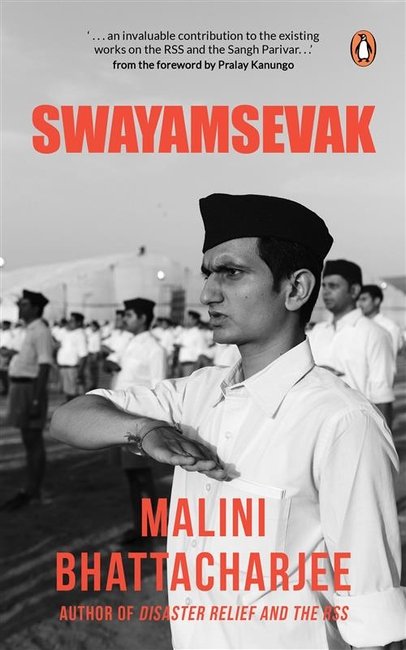
At a time when the Rashtriya Swayamsevak Sangh marks a century of presence in India’s public life, Swayamsevak turns the gaze away from its towering leadership and toward its least visible architects—the ordinary volunteers who sustain its ideological and institutional longevity.
In a landscape saturated with polemic—both reverential and critical—this book occupies an uneasy, necessary middle ground. It does not attempt to resolve the ideological contradictions of the RSS; instead, it exposes something more elusive: the making of belief. Through ten intimate life histories, the book suggests that the durability of the Sangh lies less in doctrine and more in the deeply internalized ethic of seva, discipline and belonging—raising urgent questions about how power embeds itself not just structurally, but emotionally.
What makes Swayamsevak especially timely is its refusal to flatten its subjects into either caricatures or cautionary tales. These are not the usual faces of power—no politicians, no figureheads—but farmers, doctors, diaspora workers, and women negotiating exclusion within the very system they serve. In an India grappling with questions of identity, nationalism and citizenship, these stories reveal how ideology travels through the everyday: in acts of service, in moments of personal loss, in quiet assertions of faith. The book’s most compelling tension lies here—it humanizes without absolving, listens without endorsing. In doing so, it complicates the reader’s moral comfort, asking not just what the RSS is, but why it continues to resonate so deeply across class, caste and geography.
Malini Bhattacharjee brings to this work the rigour of a political scientist and the restraint of a careful listener. With over a decade of research on religion, politics and development—and a long association with the Azim Premji University—Bhattacharjee is uniquely positioned to navigate this fraught terrain. Her previous work on humanitarianism and the RSS informs this book’s central inquiry, but here she takes a deliberate methodological turn: away from critique, toward comprehension. The result is not a definitive account, but a provocative one—an invitation to engage with an organization that remains, even after a hundred years, both deeply visible and persistently opaque.