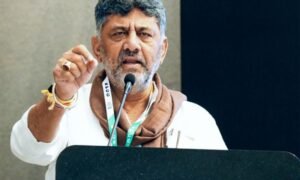

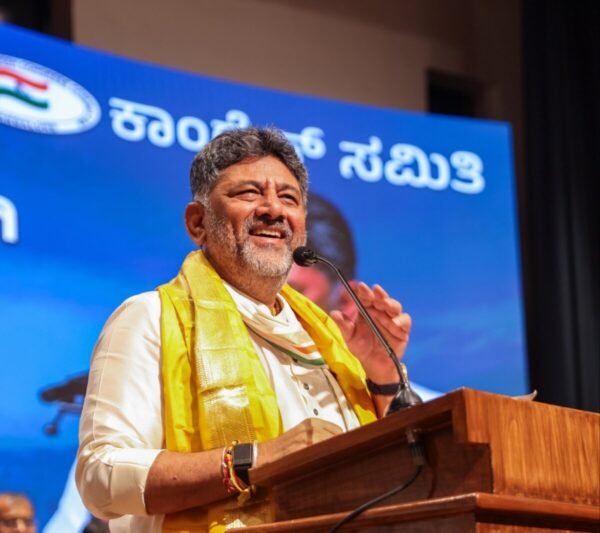
Picture : @DKShivakumar/X
Doddalahalli Kempegowda Shivakumar’s, journey from a student activist in Kanakapura in Bengaluru South district to becoming Karnataka’s 25th Chief Minister has been of endurance and perseverence. Born on May 15, 1962, in Dodda Alahalli village near Kanakapura to Kempegowda and Gowramma, Shivakumar entered public life during his college years in the early 1980s. From the dusty lanes of Dodda Alahalli village, the 64-year-old leader survived electoral setbacks, imprisonment and endured a protracted struggle to reach the top post, he had long aspired for.
A diehard Congressman at heart, Shivakumar has spent years building his image as an efficient organiser capable of delivering victories and protecting the party during its most difficult moments. The four-decade-long journey is marked by turbulence, triumphs and unflinching loyalty to the Congress party.
I am deeply grateful to everyone who has conveyed their wishes, blessings, and good wishes on this special occasion.
This affection from people across Karnataka and the country strengthens my resolve to serve with humility, dedication, and honesty. The trust placed in me is not… pic.twitter.com/yl0tQxyukn
— DK Shivakumar (@DKShivakumar) June 4, 2026
After unsuccessfully contesting the 1985 Assembly election from Sathanur against political heavyweight and former Prime Minister H D Deve Gowda, Shivakumar entered the legislature in 1989 at the young age of 27 and went on to win eight consecutive Assembly elections, an achievement few Karnataka politicians can match. His first ministerial stint was in the S Bangarappa government where he held the prison portfolio. The then Chief Minister, Bangarappa predicted that Shivakumar would hold the highest political office in the state one day.
Over the years, Shivakumar consolidated his position as the Congress party’s most influential Vokkaliga leader and became indispensable to the party’s organisational machinery. His reputation as the Congress’ “troubleshooter” was cemented in 2017 when the party assigned him the politically sensitive task of housing and safeguarding 42 Gujarat Congress MLAs in Bengaluru ahead of the Rajya Sabha elections. The operation ensured the victory of Congress candidate Ahmed Patel and elevated Shivakumar’s standing within the party’s national leadership.
Together for the people, together for progress.
Met AICC President Shri @kharge and Leader of the Opposition Shri @RahulGandhi in New Delhi today, along with Shri @siddaramaiah. pic.twitter.com/8MJIzXck2O
— DK Shivakumar (@DKShivakumar) June 2, 2026
The period also marked the beginning of a prolonged phase of legal and political troubles. Income Tax raids, Enforcement Directorate investigations and his arrest in a money-laundering case in September 2019 tested both his political future and personal resilience.
Shivakumar spent 50 days in Delhi’s Tihar Jail, a period many observers believed could weaken his influence within the Congress. However, his stature within the party appeared to grow.
For Shivakumar, popularly known as ‘Kanakapura Bande’ (the Rock of Kanakapura), patience had become a political necessity. Recognising his organisational abilities, the Congress leadership appointed him Karnataka Congress president in 2020, at a time when the party was facing one of its lowest phases in the state. The Congress had won only one out of Karnataka’s 28 Lok Sabha seats in 2019, and the Congress-JD(S) coalition government collapsed, and several legislators had defected, helping the BJP return to power. At this juncture, Shivakumar was tasked with rebuilding a demoralised organisation.
The turnaround came in 2023 when the Congress stormed back to power with a decisive mandate. He followed that by helping improve the party’s Lok Sabha tally in Karnataka from one seat in 2019 to nine seats in 2024.
After the Congress swept the 2023 Assembly elections with 134 seats, Shivakumar emerged as a leading contender for the chief minister’s post. However, the party leadership eventually chose Siddaramaiah, appointing Shivakumar as Deputy Chief Minister while entrusting him with key portfolios and allowing him to continue as Karnataka Pradesh Congress Committee president.
Soon after, word spread on power-sharing arrangement in which Siddaramaiah would lead the government during the first half of the term before making way for Shivakumar. While neither leader publicly acknowledged such an understanding, speculation persisted throughout the government’s tenure.
The debate intensified after the Congress government completed two-and-a-half years in office in November 2025, triggering renewed discussions over succession and exposing competing power centres within the state unit. As speculation over the chief ministerial post intensified, he repeatedly projected confidence that perseverance would eventually be rewarded.
More than four decades later, after navigating electoral battles, internal party rivalries, defections, investigations and imprisonment, he has finally reached the office he long aspired to occupy. But Shivakumar has the daunting task ahead to consolidate the party’s strength afresh in the next two years to ensure that Congress comes back to power in 2028.