
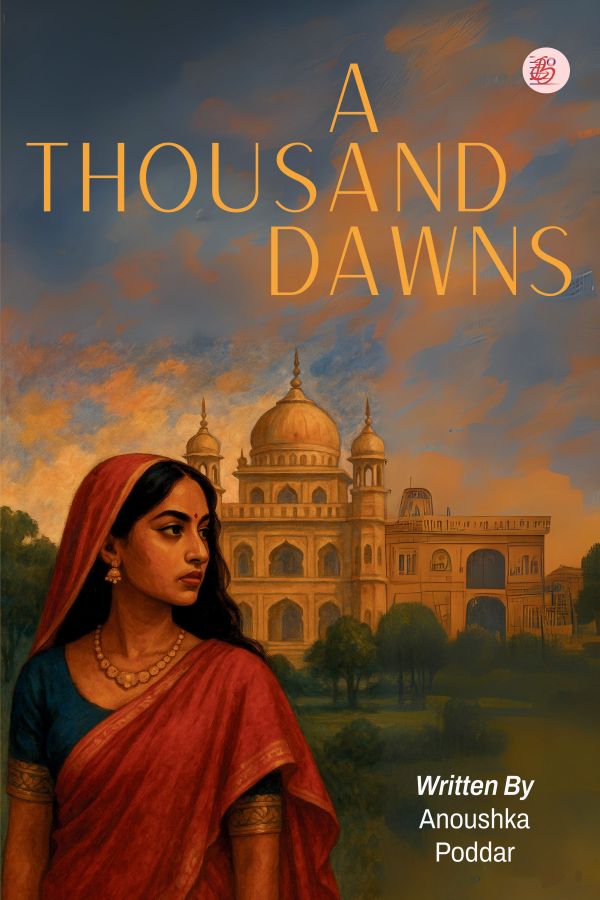
A Thousand Dawns by Anoushka Poddar is a sensitive and emotionally compelling retelling of a traditional Bengali folktale from a feminist perspective. She tells a story rooted in tradition, but a story that will speak to modern readers through its themes of jealousy, love, betrayal, grief and redemption. It also succeeds in introducing the Bengali folklore to the younger readers in an innovative and meaningful way.
Set in a royal palace, the novel revolves around three characters – Aarin, Hemaprabha and Dalim – connected by love, rivalry and fate. What starts out as a story about the relationships between women slowly develops into a deeper examination of emotional pain, social expectations and the effects of power struggles within close relationships.
One of the novel’s best features is the way its female characters are written. Anoushka gives them the emotional depth and individuality, rather than just good or bad. The heart of the story is Aarin’s emotional journey from a hopeful young bride to a woman who discovers her own strength. The king’s first queen, Hemaprabha, is portrayed with equal sensitivity, not just in terms of jealousy, but also loneliness, insecurity and vulnerability. Thus, caught in this emotional conflict, Dalim becomes one of the most tragic and memorable characters of the novel.
The writing is lyrical but accessible, carrying the flavour of oral storytelling but still relatable for modern audiences.

Anoushka Poddar
A Thousand Dawns uses these vivid characters to transform a traditional Bengali folktale into an intimate exploration of womanhood, power, grief and surviving emotionally. The result is a story that will linger with the reader long after the last page. What is especially impressive about the book is that Anoushka, only seventeen, writes with great confidence and sensitivity.
With emotional resonance, cultural richness and strong storytelling, the bookmarks Anoushka Poddar as a promising young voice in Indian fiction.