
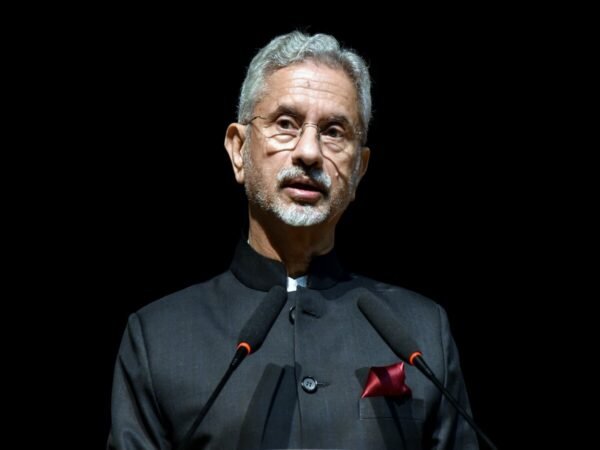
File Picture
S. Jaishankar Highlights Maritime Security as a Key Priority in an Era of Global Supply Chain Connectivity
India will ensure that issues such as free, open and rule-based maritime order, including safety of seafarers, and countering terror financing get the ‘attention they deserve’ at the United Nations Security Council, External Affairs Minister S Jaishankar has said.
India launched its official campaign for a non-permanent seat on the UN Security Council (UNSC) for 2028-29 on Monday at an event at the world body’s headquarters, attended by UN ambassadors, diplomats and officials.
Jaishankar said that India’s approach to the UN is rooted in ‘SHANTI: Securing Holistic Advancement through Norms, Trust and Integrity’, as he outlined in detail New Delhi’s priorities for the UNSC term. These are ‘a voice of the Global South; advancing reformed multilateralism; a future ready peacekeeping; addressing threats posed due to misuse of AI; securing maritime commons; and countering terror financing’, he said.
“In an era where supply chains connect our economies, the world is also increasingly focused on securing the maritime commons,” Jaishankar said. He said the challenge begins with ensuring adherence to relevant international law, specifically the UN Convention on the Law of the Sea (UNCLOS).
“Our collective interest is in maintaining safe and unimpeded flow of maritime commerce,” he said, adding that nations with requisite capabilities must also cooperate to combat piracy.
“The safety of seafarers is another major concern thrown up by developments in the Gulf,” he said.
Promoting search and rescue missions, providing humanitarian assistance and disaster relief, and encouraging capacity building while sharing best practices have all been facets where India has long been active, he said.
“We will endeavour to ensure that these issues get the attention they deserve in the Security Council,” he said. He said in maritime security, India makes wide-ranging and regular contributions, including in anti-piracy, counter-narcotics and anti-trafficking operations.
“Our forces are protecting sea lanes across the Indo-Pacific, specifically in the northern and southern Arabian Sea, Gulf of Aden, Malacca Straits and even in the Gulf of Guinea.”
India’s focus on securing maritime commons comes amid challenges unleashed by the US-Israel conflict against Iran, with closures and blockades of the critical chokepoint Strait of Hormuz adversely impacting global fuel prices, critical supply chains and endangering the lives of seafarers.