

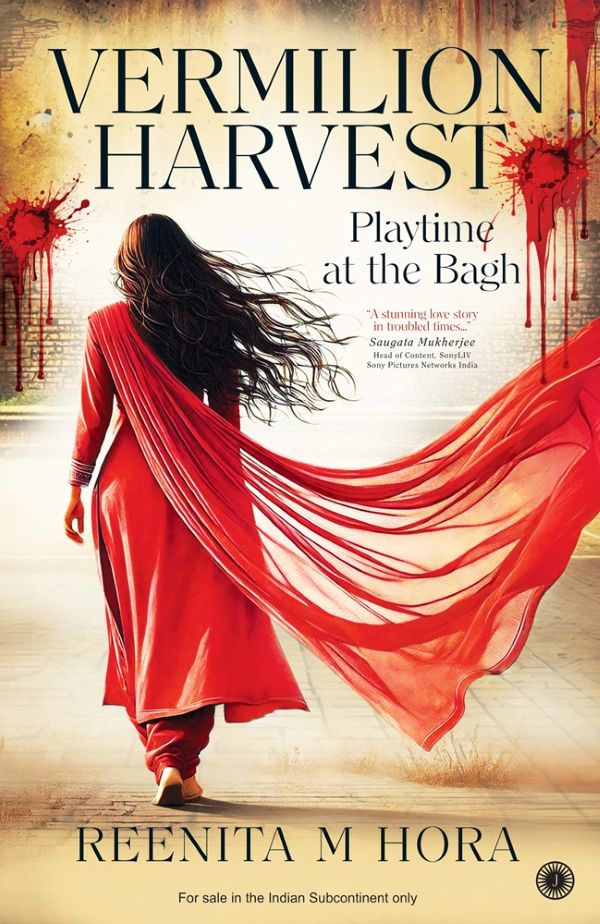
In recent years author Reenita Malhotra Hora has carved niche for herself with her story telling in both fiction and non-fiction . From her maiden book in 2004 – Inner Beauty: Discover Natural Beauty and Well-Being with the Traditions of Ayurveda there was no looking back . She in 2024 mesmerised the audience with her moving book – Vermilion Harvest: Playtime at the Bagh.
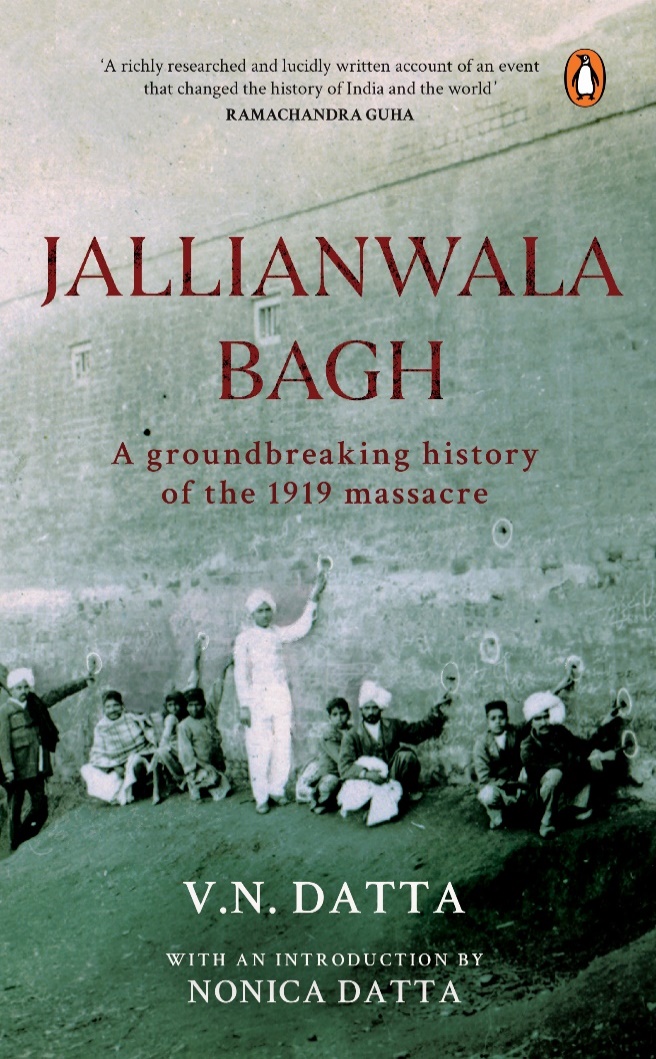
The novel intertwines a cross-cultural love story between Aruna, an Anglo-Indian school teacher, and Ayaz, a young political firebrand drawn into the Rowlatt Satyagraha. As their lives unfold against the growing unrest in colonial Amritsar, the story builds toward the fateful events of April 13, 1919. Rich in historical detail and emotional depth, the book explores themes of identity, belonging, and the human cost of resistance.
In a candid e-mail interview she talks at length about the book the challenges, her writing journey , future projects and much more .
Excerpts :
Q – What made you opt for very intriguing Title – Vermillion Harvest: Playtime At Bagh
A : Vermilion, or sindhur, adorns the hair parting of a married Hindu woman. It signals life, vitality, commitment. In the story, the last time Ayaz sees Aruna, he applies vermilion to her hair, marking her as his bride in an unofficial act of Hindu marriage. But within hours, she is a widow. This is the same color runs through the blood spilled at Jallianwala Bagh on Baisakhi, 1919. Beauty and catastrophe, I believe are inseparable. This duality is the heartbeat of the story. Then, the subtitle, ‘Playtime at the Bagh’ is a metaphor for General Dyer’s deadly play of bullets in what should have been playtime on the day of Baisakhi celebrations.
Q – Any specific reason why Jallianwala Bagh massacre is the background/ backdrop for the story.
A : History without people just becomes a matter of dates and numbers. As a Punjabi, this tragedy is blood memory. It was never abstract. So I wanted to create a story that went beyond the numbers to talk about who was there, what they experienced, the confusion, the disbelief, and the tension that existed in Amritsar and Punjab in the days, weeks, and moments leading up to the massacre.
Most people outside India have never heard of it. Indians learn about it in maybe two paragraphs of a school history lesson. In 2019, on the 100th anniversary, Indians formally requested an apology from Queen Elizabeth II. It never came. There has never been a fictional story set against this massacre. That alone should tell you something, given the scale of it and what it set in motion for the Indian independence movement.
There is also something about love stories set against disasters that has captivated me since I was a teenager. Erich Segal’s LOVE STORY and TITANIC were huge inspirations, helping me truly accept that love stories were literary fiction and not romance. The pitch I always return to: TITANIC meets GANDHI. A real disaster. Real love. Real grief. The Jallianwala Bagh massacre had been in my system for the longest time. I knew early on it would eventually become the setting for my epic love story.
Q What is the message you want to convey to the people with this book?
A : The New York Times once argued that historical fiction belongs to those the official record ignores: the women, the colonized, the ones on the wrong side of every wall, giving voice to the burned and redacted documents and the experiences that were never written down. That is exactly what this book does. The questions it raises about colonial violence, freedom of expression, and political terror are not questions from 1919. In India, in America, right now, the same cycles are turning. Which begs the question: what have we actually learned in the last 100 years. There is a paucity of colonial Indian fiction written by Indians, about Indians, from the inside. VERMILION HARVEST fills that gap. It puts you inside a specific, turbulent, post-World War I Punjab through the eyes of a woman nobody’s history books follow.
Q Going by your past you have ventured into various genres . Is there Any particular genre which you like?
A: This is a hard question to answer because the honest answer is: all of it. Literary storytelling is my first love, whether fiction or non-fiction. That comes through in VERMILION HARVEST, ACE OF BLADES, REVOLUTION’S WIFE, and ARKA AND THE RAMAYANA THIEF, my unpublished middle grade fantasy. But I also write a lot of comedy. OPERATION MOM is more com than rom, and it is currently in a book-to-film process. PITCH SPARKS is a contemporary interracial romance where characters make choices that force them to close a door in order to open a window. Comedy runs through my screenplays and my children’s work too — the banter, the real life situations that feel completely dire in the moment but are absolutely hilarious when you look back and reflect.
But the thing I bring to every story, regardless of genre, is metaphor and philosophy. The duality of life that is just inevitable. Without darkness, light has no meaning. Without sadness, joy cannot exist. Beauty inside deep pain. That tension lives in every single thing I write, whether it makes you laugh or breaks your heart. Sometimes both at once.
Isn’t that just life?
Q – How Challenging it was to write this historical fiction. The Jallianwala Bagh massacre has been widely written.
A: I would argue it hasn’t been. Not as fiction. My challenge was story texture. Not the political record, which exists, but the civilian experience — the confusion, the disbelief the tension that existed days, eeks and moments before anyone understood what was happening. And specifically, the women and children. The people who went to Jallianwala Bagh not as protesters but as human beings attending a harvest festival but never came home.
The research took years. A history professor friend at Wellesley College, Massachusetts helped me access General Dyer’s court transcripts. From there, I mapped the geography of Amritsar, I traced the movements of Congress leaders Saifuddin Kitchlew and Dr. Satyapal, and followed the tension building in the city week by week before April 13th. Every incident I researched could have exploded into a significant but was somehow curbed. But all of this only made one thing clearer: by the time Dyer walked in, Amritsar was a pressure cooker with no release valve. Getting this atmosphere right was critical.
Q – Tell us about your journey as a writer. How has been the feedback so far ?
A : My first books were about Ayurveda because I found myself, quite by accident, becoming an entrepreneur in a space nobody understood yet and I needed to explain it. Four books later I was hungry to go deeper, but the market wanted the 101 level books. So I moved on to journalism and started writing fiction.
My sojourn in Hong Kong changed everything. My husband’s job took us there, and a course in financial journalism at university led me to RTHK, the public radio system, and eventually to Bloomberg. I wrote my first fiction books while I was working for public radio but then I stopped writing books for a while after that. Bloomberg had a policy: anything you write belongs to us. Not even a cooking show without permission. So I left.
Back in San Francisco, I found my way back to fiction. Published OPERATION MOM, VERMILION HARVEST, and now ACE OF BLADES. The feedback has been the thing that keeps me going. VERMILION HARVEST won the Overall Grand Prize at the Chanticleer International Book Awards. OPERATION MOM won the Eric Hoffer Book Award, the IndieReader discovery award and the Chanticleer category prize for romance. LA Weekly called me one of the top indie writers reinventing Indian culture and humour in America. But honestly, what matters more than any of that is when a reader tells me the book touched them.
Q – From Ace of Blades to Vermillion Harvest : Playtime at Bagh what does one expect from you next. Any ideas you have in your mind to write next ?
A : A kids’ picture book, FESTIVAL OF LIGHTS, is due out later this year from Harper Collins USA. Then in the works: PITCH SPARKS, a contemporary interracial romance set in the Silicon Valley startup world, steamy and sharp, very different from anything I have done before. ARKA AND THE RAMAYANA THIEF is middle grade adventure fantasy, Percy Jackson meets Vedic mythology. And I am working on a non-fiction book about Ayurveda and its relationship to the mind and mental health.
On screen, REVOLUTION’S WIFE is currently in post-production. A historical thriller short film about one of the first Indian women in America, set against the Hindu-German Conspiracy Trial of 1917 San Francisco. It is the proof of concept for a feature. OPERATION MOM is in pre-production as a feature film. And ACE OF BLADES is in development as an Indian web series. All of it is South Asian, all of it is personal, and none of it fits neatly into a box. Which is exactly how I like it.