
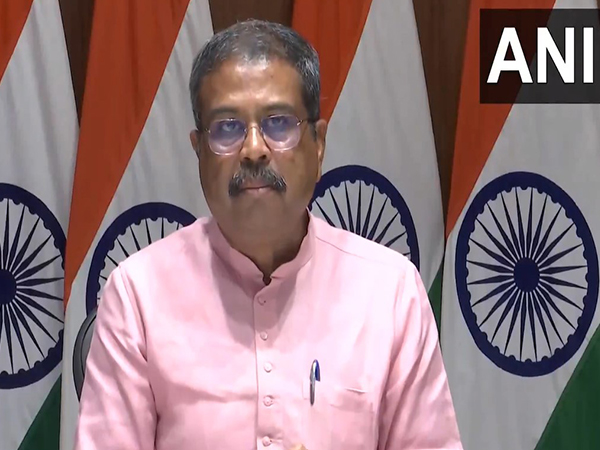
File Picture : ANI/X
After Chief Justice of India Surya Kant had strongly objected to a chapter on judicial corruption in the National Council of Educational Research and Training (NCERT)’s Class 8 social science curriculum, prompting the syllabus-setting body to withdraw the contentious textbook from its website.
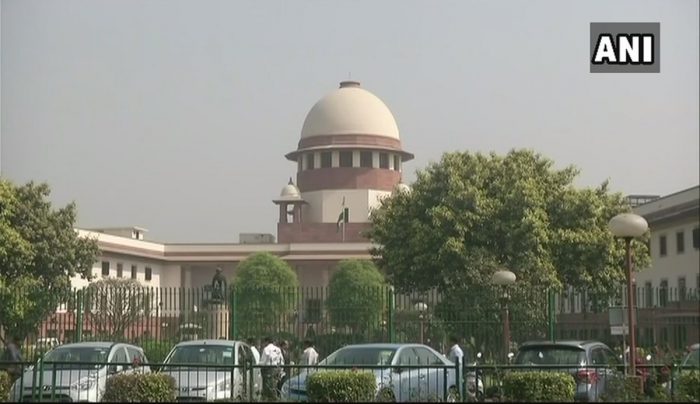
A three-judge bench comprising the CJI and justices Joymalya Bagchi and Vipul M Pancholi took suo motu cognisance of the ‘objectionable’ statements about the judiciary in the new textbook after senior advocate Kapil Sibal, alongside Abhishek Singhvi, mentioned the matter for urgent consideration.
Union Education Minister Dharmendra Pradhan said that the government will conduct an inquiry into the introduction of a section on “corruption” in the judiciary in NCERT’s new Social Science textbook for Class 8, adding that responsibility for this will be fixed and that action will be taken against officials responsible for it.
The NCERT social science textbook for Class 8 says corruption, a massive backlog of cases, and the lack of an adequate number of judges are among the challenges faced by the judicial system.
After stern words by the Supreme Court that it will not allow ‘anyone on earth’ to tarnish the judiciary’s integrity, the NCERT pulled the textbook from its website, with sources saying the government was livid with the controversial references in the curriculum.
The council, responsible for school education curriculum, is also considering the removal of the controversial portions from the books already printed, sources said.
What the NCERT textbook said
The book pegs the approximate number of pending cases in the Supreme Court at 81,000, in high courts at 62.40 lakh, and in district and subordinate courts at 4.70 crore.
It highlights the judiciary’s internal accountability mechanisms and refers to the established procedure for receiving complaints through the Centralised Public Grievance Redress and Monitoring System.
According to the book, over 1,600 complaints were received through this mechanism between 2017 and 2021.
The textbook also quotes former Chief Justice of India BR Gavai, who in July 2025 said that instances of corruption and misconduct within the judiciary had a negative impact on public confidence.
‘However, the path to rebuilding this trust lies in the swift, decisive and transparent action taken to address and resolve these issues… Transparency and accountability are democratic virtues,’ he is quoted as saying in the book.
The government sources said that data on corruption in the judiciary was available in parliamentary records and the national judicial data grid, but the Union Law Ministry was not consulted for cross-verification of the fact.