
File Picture : ANI/X
Thirty-two-year-old Harish Rana was a gymming and football enthusiast and was pursuing a B.Tech degree at Panjab University in 2013 when he fell from the fourth floor of his paying guest accommodation and sustained a brain injury leading to coma.
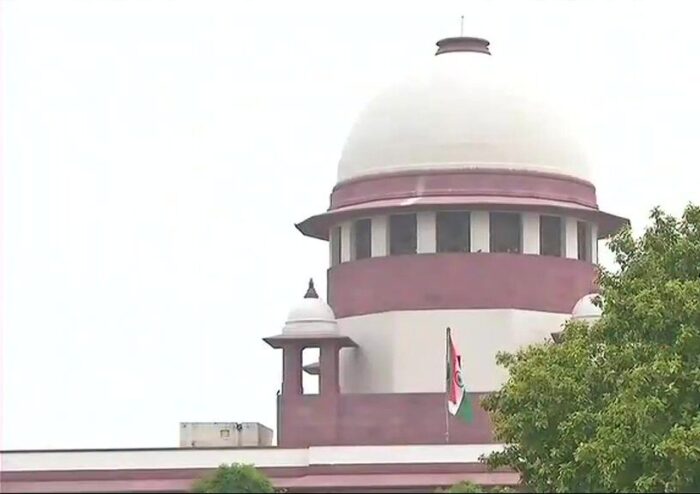
The Supreme Court has permitted the withdrawal of life sustaining treatment for Rana, lying in a comatose condition for over 13 years, noting that prospects of his recovery are negligible.
Rana’s brother Ashish recalled they used to play football and video games together. His relatives and friends shared that he was extremely energetic, physically active, and deeply interested in games prior to his accident.
Passive euthanasia is the intentional act of letting a patient die by withholding or withdrawing life support or the treatment necessary to keep him alive.
Ghaziabad native Rana met with the tragic accident on August 20, 2013, resulting in a diffuse axonal injury. Eldest of the three siblings, he was initially rushed to a local hospital, but within a few hours, he had to be shifted to the Postgraduate Institute of Medical Education & Research, Chandigarh due to the severity of his medical condition.
From August 21, 2013 to August 27, 2013, Rana remained admitted at the PGI Chandigarh, where he was administered treatment in the form of conservative management, including AED, analgesics, ventilating support, antibiotics, tracheostomy, and feeding through a Ryle’s tube (nasogastric tube).
Although he was discharged from PGI Chandigarh on August 27, 2013, his condition remained far from recovery.
Following his discharge, his fragile health condition necessitated frequent hospital admissions and regular medical treatments for his head injury, seizures, pneumonia and bedsores at the Jai Prakash Narayan Trauma Centre, All India Institute of Medical Sciences, New Delhi.
Rana’s medical records show that he had a history of seizures in 2014, for which he was put on medication.
His medical reports indicate that he exhibits no evidence of awareness of his environment and is incapable of interacting with others.
“He has sleep-wake cycles and sleeps through the night. His eyes open with normal blinks but with no purposeful movement or as a response to auditory, verbal, tactile or painful stimulus.
“The applicant has remained bedridden ever since the incident, due to which he has often suffered terribly from painful bedsores, despite receiving the most attentive nursing care from his mother. Although the applicant has largely been cared for at home, yet his susceptible condition has time and again necessitated hospitalisation for infections,” the top court noted.