
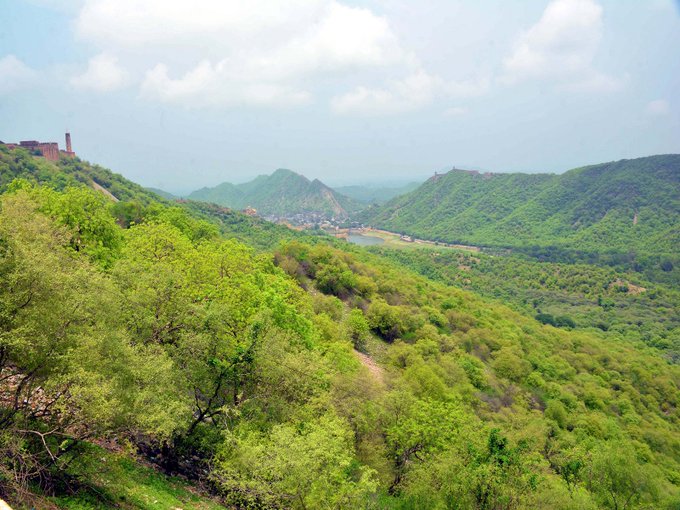
Picture File : @ani_digital/X
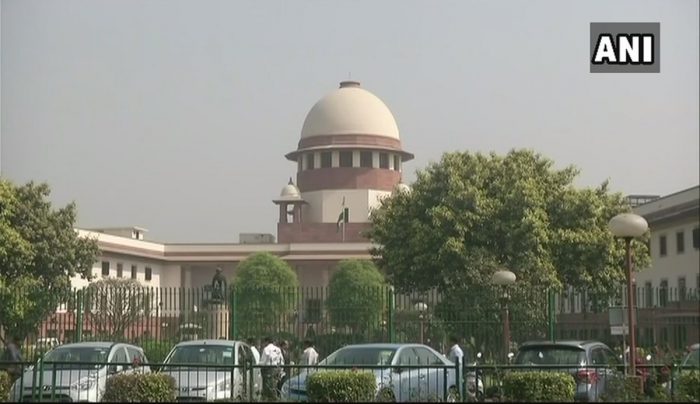
The Supreme Court has stayed its own order that accepted a new definition for the Aravalli hiils and ranges, and said a high-powered expert panel will be set up to resolve ‘critical ambiguities’ and prevent any regulatory gaps that might undermine the ecological integrity of the world’s oldest mountain system.
As the uniform definition of Aravallis sparked an outcry among environmentalists, the court kept in abeyance its November 20 directions, saying there is a need to probe further whether the criteria of 100-metre elevation and the 500-metre gap between hills will strip significant portion of the ranges of ecological protection.
At the heart of the raging issue is what exactly constitutes the hills and ranges in the Aravalli region, with environmentalists saying the restrictive 100-metre definition increases the area open to mining and construction.
The top court had earlier accepted the recommendations of a committee of the Ministry of Environment, Forest and Climate Change on the definition of the Aravalli hills and ranges to protect the mountain system.
The committee had recommended that “Aravalli Hill” be defined as any landform in designated Aravalli districts with an elevation of 100 metres or more above its local relief, and an “Aravalli Range” will be a collection of two or more such hills within 500 metres of each other.
A vacation bench headed by Chief Justice Surya Kant said it seemed prima facie that the earlier report of a committee and the verdict had “omitted to expressly clarify certain critical issues” and there is a “dire need to further probe” the matter.
It also directed that as set out in the order dated May 9, 2024, until further orders, no permission shall be granted for mining in the ‘Aravalli Hills and Ranges’, as defined in the August 25, 2010, FSI report, without its prior permission.
“There has been a significant outcry among environmentalists, who have expressed profound concern about the potential for misinterpretation and improper implementation of the newly adopted definition and this court’s directions,” the bench, also comprising Justices J K Maheshwari and Augustine George Masih, said.
It said this public dissent and criticism appear to stem from perceived ambiguity and lack of clarity in certain terms and directives issued by the court.
“Consequently, there is a dire need to further probe and clarify to prevent any regulatory gaps that might undermine the ecological integrity of the Aravalli region,” the bench said in its order passed in a suo motu matter titled ‘In Re: Definition of Aravalli Hills and Ranges and Ancillary Issues”.
Reacting to the SC ruling, Coongress General Secretary in Charge of Communications and Senior Leader , Jairam Ramesh posted on X
Yesterday’s Supreme Court order – recalling, on its own, its verdict on the redefinition of the Aravallis that had been delivered on Nov 20, 2025 and that had been enthusiastically embraced by the Modi Govt – was most necessary and welcome. Now three other urgent tasks await the Honourable Supreme Court on environmental matters that should also be taken up suo moto like the Aravallis matter. 1. On August 6, 2025, the Supreme Court had put on hold the proposal of the Govt of Rajasthan and the Govt of India to redraw the boundaries of the Sariska Tiger Reserve to enable the opening of around 57 closed mines. This proposal should be REJECTED categorically. 2. On Nov 18, 2025, the Supreme Court had opened the door for a review of its own earlier verdict of May 16, 2025 that had barred retrospective environmental approvals. Such approvals go against the very foundations of jurisprudence and make a mockery of governance. The review was uncalled for. Retrospective approvals should NEVER be permitted. Laws, regulations, and rules are, quite often, deliberately by-passed in the confidence that the decision-making process can be managed even after project implementation starts. 3. The National Green Tribunal (NGT) was set up in Oct 2010 by an Act of Parliament after detailed consultations with the Supreme Court and with its full support and backing. Its powers have been thoroughly diluted over the past decade. The Supreme Court’s intervention is now essential to ensure that the NGT is allowed to function as per law without fear or favour.
Former Rajasthan Deputy Chief Minister and PCC Chief Sachin Pilot too reacted to SC ruling on X
A welcome directive by the Hon’ble Supreme Court through the suo motu cognizance of concerns surrounding the definition of the Aravalli Hills to stay its implementation. The BJP government’s proposed definition of the Aravalli hills, had triggered widespread public concern and… pic.twitter.com/Yml8DPoqTv
— Sachin Pilot (@SachinPilot) December 29, 2025