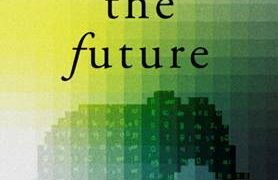

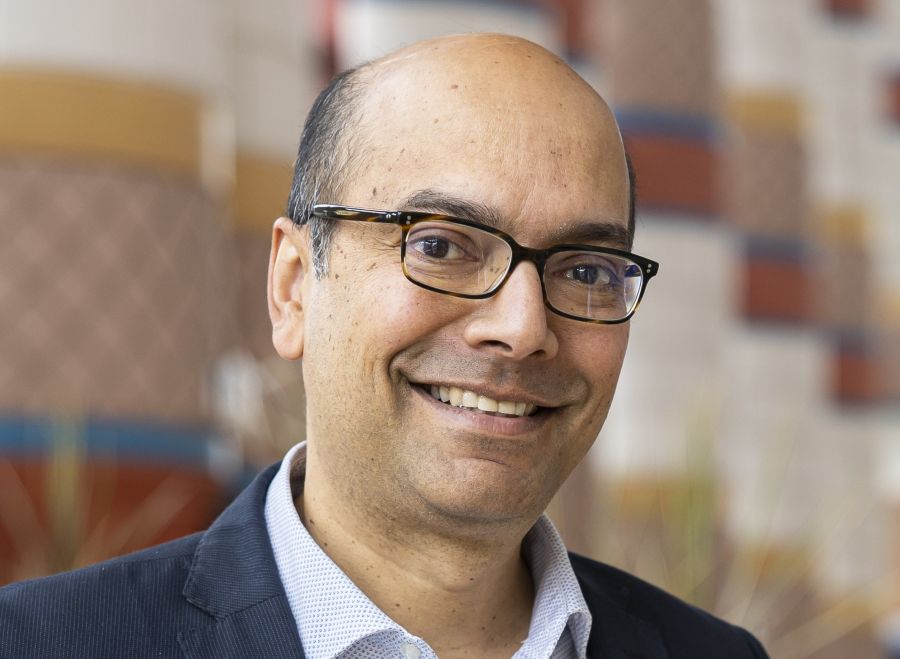
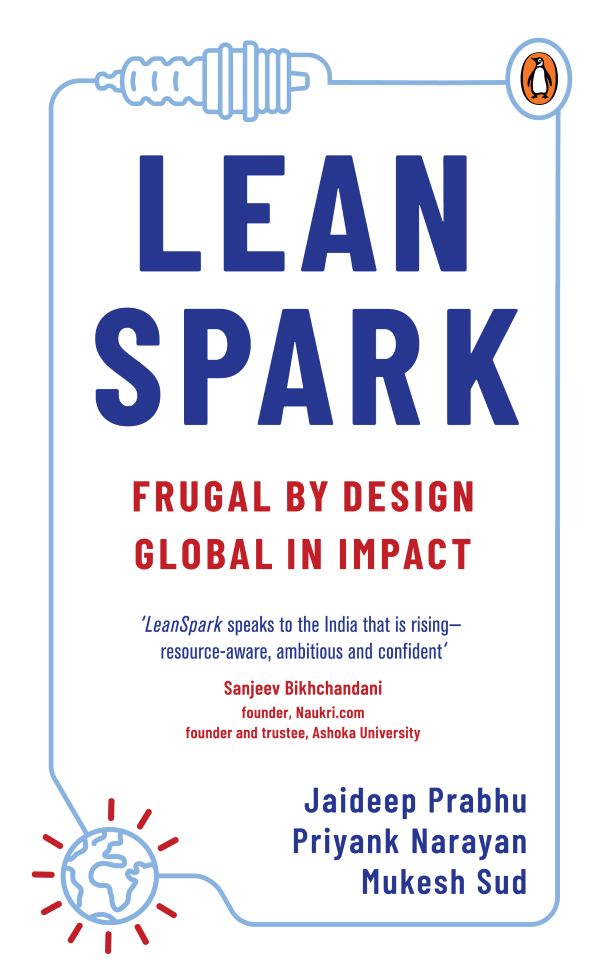
After the smashing success of his previous book which he co- authored Jugaad Innovation, Jaideep Prabhu is now once again back in the limelight with his another book Lean Spark : Frugal By Design, Global in Impact ( with Priyank Narayan, Mukesh Sud) . LeanSpark turns frugal thinking into a powerful, scalable innovation that thrives within limits without cutting corners. It proves that true progress comes from converting constraints into strategic strength.
LeanSpark argues that the future doesn’t belong to those with the biggest budgets or the fanciest labs. LeanSpark demonstrates how India’s frugal innovation model can inspire organizations worldwide to innovate faster, reduce costs, and enhance customer value—without exhausting the planet’s resources. This is not just about surviving scarcity; it’s about turning limitations into strategic advantages. It belongs to those with the mindset to turn scarcity into strength. This isn’t jugaad romanticized.
It is jugaad re-engineered: replicable and scalable. In a candid e-mail interview Jaideep Prabhu speaks about his forthcoming book and looks at the future with the arrival of AI as well as India in terms of innovation and entreprenuership .
Excerpts :
Q – Tell us about the title of the Book – LeanSpark: Frugal By Design, Global in Impact? What is the reason behind this heading/title?
A : LeanSpark captures a simple but powerful idea: breakthrough innovation often begins not with abundance, but with constraint. “Frugal by Design” signals intent, i.e., solutions deliberately built to work with limited resources, not as compromises but as world-class designs. “Global in Impact” reflects how such solutions, born in resource-constrained contexts like India, can scale and travel worldwide.
Q – When you say move beyond makeshift fixes to stand for solutions that are lean, scalable and sustainable what do you exactly mean?
A: Jugaad is often (mis)understood as a temporary workaround. What we argue for and develop in LeanSpark is a progression from improvisation to intentional design. Specifically, how lean solutions can be rigorously thought through, scaled across contexts, and made sustainable over time. The shift we describe is from “making do” to “designing smart,” without losing the speed and creativity of constraint-driven thinking.
Q – What is the message you want to put across to the people with this book? Which audience are you reaching out to?
A : The central message is that constraints are not barriers to innovation, they are catalysts. LeanSpark is written for entrepreneurs, corporate leaders, innovators, policymakers, educators, and students who want to build impactful solutions without waiting for the perfect conditions to materialise. It speaks especially to those operating in uncertain, resource-scarce, fast-changing environments.
Q – Tell us the success of frugal Innovation in India and why you think it is a role model for the future and the world should adopt as well. Any specific reasons?
A: India has repeatedly demonstrated that high-impact solutions can emerge under serious constraints in all kinds of sectors: from mobility and finance to space and digital public infrastructure. Frugal innovation here is not about cost-cutting but about deep contextual understanding. As global challenges grow more complex and resource-limited, this approach offers a replicable and resilient innovation model for the world. India has many examples of this from systems like UPI and ONDC to ventures like Zoho, Thyrocare, Chargebee, Agnikul, Bharat Forge, Mahindra Reva, Central Square Foundation, and the ePlane Company.
Q – UPI has become a smashing success in India given the amount of transactions done. Did you anticipate /visualise its success in such a big way? That too in a country like India where there is an urban and rural population.
A : UPI’s success reflects not just technological excellence, but design rooted in inclusion, frugality and simplicity. While the speed and scale exceeded many expectations, its adoption validates a key argument of LeanSpark: when systems are designed for the margins, they scale naturally to the mainstream. UPI is a textbook example of frugal thinking with global-class execution.
Q – AI is touted to replace manpower and result in jobs loss. How do you see countries are preparing for this new challenge ahead?
A : AI will undoubtedly disrupt labour markets, but the real risk lies in unpreparedness. Countries that invest in reskilling, adaptability, design thinking, and human-AI collaboration will gain an advantage. In LeanSpark, we emphasise that technology must be paired with institutional and human system innovation, and not just be treated on its own, as a standalone solution.
Q – India is the fourth largest economy and is striding ahead to be number three in the years ahead. Given India’s population and need for employment, how scary is the AI potential to take over?
A : The concern is real, but so is the opportunity. India’s demographic scale means it cannot rely on capital-intensive growth alone. Lean, human‑centred innovation, augmented rather than replaced by AI, can generate new forms of employment, particularly in services, entrepreneurship, and complex problem‑solving work that cannot be fully automated.
Q – For Entrepreneurship big money is the key some may think. Does LeanSpark break this myth: that with a shoestring budget one can attain greater heights too.
A: Absolutely. One of the book’s core arguments is that having capital (and resources more generally) is often overrated at the early stages. What matters more are insight, speed, and disciplined experimentation. LeanSpark shows, with many examples, how entrepreneurs can achieve disproportionate impact with limited resources. Not despite scarcity, but because of it.
Q – Prime Minister Narendra Modi has a vision for India to be a developed nation by 2047. How do you see India ahead in terms of innovation and entrepreneurship and India market is sought after Tech giants like says Google’s $15 Billion AI Data Centre In Andhra Pradesh?
A: India’s path to 2047 will be defined less by imitation and more by original innovation models. Large investments, such as global tech infrastructure commitments, matter; but their real value lies in how they interact with India’s frugal, adaptive innovation ecosystem. This combination positions India as both a market and a source for new products, services and business models.
Q – Lastly, each of your books have been well received. Which one according to you while writing gave you immense satisfaction/ rather you enjoyed writing the most.
A : Every book addresses a different question, but LeanSpark was especially rewarding because it bridges theory and lived reality. It reflects patterns we have observed repeatedly across startups, corporations, and systems and which we have finally brought together in one coherent narrative. Writing it felt less like documenting ideas and more like crystallising a movement already underway.