
A Timely Intervention in Environmental Thought
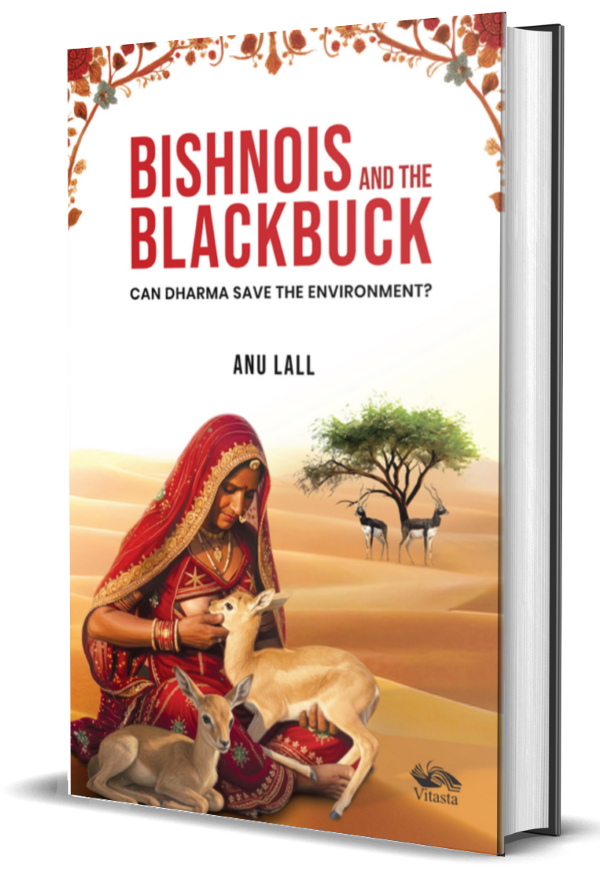
Anu Lall’s Bishnois and the Blackbuck: Can Dharma Save the Environment? arrives at a moment when environmental crises dominate global consciousness. Climate change, biodiversity loss, and ecological collapse are often discussed through modern frameworks rooted in policy and science. Lall’s book offers a refreshing counterpoint, arguing that environmental protection in India is not a recent intellectual import but a deeply lived, civilizational practice.
The Blackbuck Case: A Moral Question
The narrative begins with the widely known blackbuck poaching case, a controversy that drew national attention not only for the celebrity involved but for the unwavering resolve of the Bishnoi community. For over two decades, they have pursued justice with remarkable persistence. Lall uses this episode to ask a deeper question: what compels an entire community to stand against power and fame for the life of a wild animal? The answer, she suggests, lies in a worldview where nature is not separate from human life, but sacred and integral to it.
Remembering the Khejarli Sacrifice
A powerful section of the book revisits the Khejarli Massacre of 1730, where 363 Bishnoi men, women, and children gave their lives to protect trees. Lall treats this not as a tragic anomaly but as a defining moment in environmental history—one that reflects a profound ethical commitment to nature. The account is both moving and instructive, illustrating that conservation, for the Bishnois, is not activism but duty.
Dharma as Environmental Ethics
One of the book’s central arguments is its call for a Dharma-based framework for environmental protection. Drawing on ancient texts like the Ramayana and the Mahabharata, Lall shows how reverence for forests, animals, and rivers has long been embedded in Indian thought. In this framework, humans are not masters of nature but participants within it, bound by moral obligations. This perspective challenges the dominant narrative that positions environmentalism as a modern, largely Western construct.

Bridging Tradition and Modernity
What makes Lall’s work particularly compelling is its interdisciplinary approach. She seamlessly weaves together history, religion, ecology, and law to demonstrate how the Bishnoi philosophy continues to remain relevant. Rather than romanticizing tradition, the book positions it as a dynamic and practical model that can engage with contemporary challenges, including legal battles and policy debates.
Critical Reception and Endorsements
The book has received strong early praise from diverse voices. Shashank Mani emphasizes its call for a new modernity rooted in cultural strength, while T. V. Mohandas Pai highlights its message of environmental trusteeship. Conservationist M. K. Ranjitsinh and scholar Vinod Jambhadas commend its research depth and cultural sensitivity. These endorsements reinforce the book’s intellectual and emotional impact.
A Call for Reflection
Ultimately, Bishnois and the Blackbuck is not just a book about a community—it is a broader meditation on how we understand and practice environmentalism. Lall challenges readers to rethink whether sustainability can move beyond policy into everyday life. By foregrounding the lived experiences and sacrifices of the Bishnois, she presents a powerful case for reimagining conservation through the lens of dharma.
In doing so, the book leaves readers with a compelling thought: perhaps the solutions to our most pressing environmental challenges are not entirely new, but have been quietly sustained for centuries.