
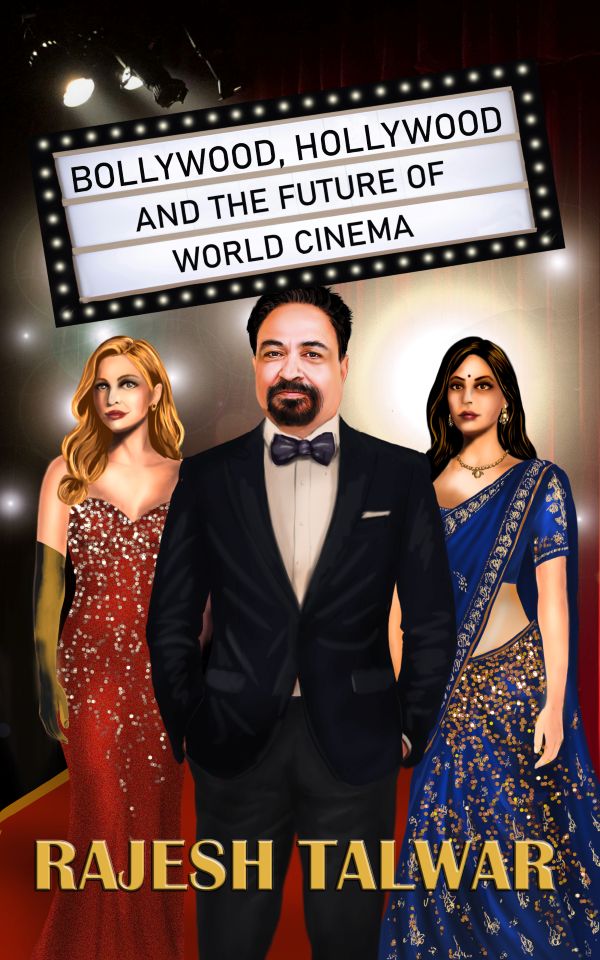
Bollywood, Hollywood and the Future of World Cinema by Rajesh Talwar is a timely and engaging look at how cinema is changing across the world. At a time when films are being reshaped by technology, global audiences, and new cultural influences, Talwar offers a clear and easy-to-read overview of where Indian and international cinema stand today.
What makes the book enjoyable is that it isn’t written only for film experts. Talwar writes in a way that appeals to anyone who loves movies—whether they enjoy big Bollywood blockbusters, follow film stars, or simply want to understand how cinema affects society. His essays on legends like Amitabh Bachchan, Rajinikanth, Sridevi, Dev Anand, and Hema Malini offer interesting insights and fresh perspectives. He also highlights global filmmaking greats such as Satyajit Ray, Raj Kapoor, Charlie Chaplin, and Akira Kurosawa, helping readers see cinema as a truly international art form.
The book takes readers on a journey from Mumbai to Seoul, Tokyo, Beijing, and Hollywood. Talwar explains how Asian cinema is rising, how Hollywood’s influence is shifting, and why India now has a major opportunity to grow its global presence. His comparisons are easy to follow and show how India can use its rich storytelling traditions, music, and cultural strengths to reach wider audiences.
One of the most important parts of the book is Talwar’s explanation of the Hema Committee Report, which exposed serious issues in the Malayalam film industry. Drawing on his background in law and human rights, Talwar breaks down the findings in a way that is clear and meaningful, while also discussing what the rest of the Indian film industry can learn from it.
The book also looks ahead at the future—AI in filmmaking, the growing impact of K-pop, how music travels across borders, and how India can improve its global competitiveness through better storytelling and use of technology.
Overall, Bollywood, Hollywood and the Future of World Cinema is thoughtful, relevant, and very readable. It simplifies big ideas without losing depth. Whether you are a film lover, a student of cinema, or curious about how Indian movies fit into the global picture, this book is an insightful and timely read.