
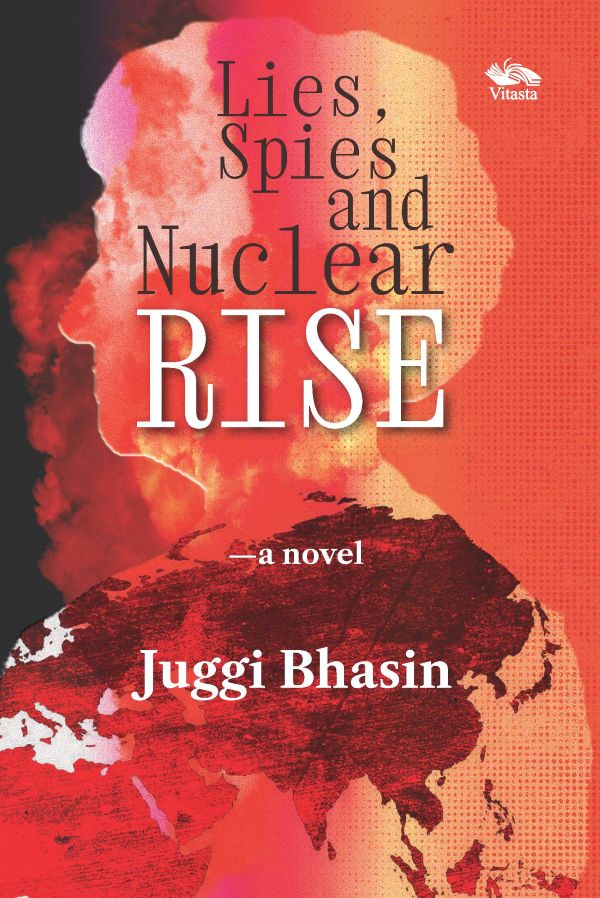
Juggi Bhasin, one of India’s pioneering television journalists and an established voice in political thrillers, returns with Lies, Spies and Nuclear Rise (Vitasta)—a sharp, high-stakes work of “reality fiction” that fuses espionage, political theatre, and nuclear brinkmanship into an electrifying narrative.
Set against a turbulent moment in India’s political history, the novel centres on Prime Minister Priya Kaul—a leader under siege from every direction. Deserted by her allies, undermined by her own son, and relentlessly tracked by foreign intelligence networks, Priya takes a risky political gamble: she authorises India’s first nuclear test in a desperate bid to regain control of a rapidly fracturing nation.
This decision triggers a fierce intelligence war involving the CIA, ISI, and RAW, each pursuing its own agenda in a dangerously shifting landscape. Bhasin populates this world with memorable characters—Dr Venkat Iyer, the brilliant atomic scientist working against an unforgiving clock, and Rhino (Sudhir Raina), the battle-hardened RAW spymaster navigating a maze of betrayal, double agents, and impossible choices.
Bhasin excels at combining a thriller’s pace with a journalist’s insider point of view. The result is a narrative that examines the politics of power, the price of national ambition, and the moral decay that accompanies leadership in a way that feels strangely realistic.
Bhasin exposes a harsh reality as clandestine operations intensify and betrayals proliferate loyalty is a commodity in the corridors of power, and lying is frequently the price of survival.
Lies, Spies, and Nuclear Rise is a compelling political thriller that is steeped in espionage, shifting alliances, and the deep-seated anxieties of India’s strategic landscape. It is a powerful, creative meditation on power, vulnerability, and the thin line between success and disaster, though it might not resonate with everyone.
In conclusion, Lies, Spies and Nuclear Rise is more than a political thriller—it is a mirror to the India we know, and the India that often remains hidden beneath layers of power, fear, ambition, and betrayal. The novel ultimately leaves readers with a haunting question: Who truly pays the price for national security—the leaders, the scientists, the spies… or the entire country?