Environment
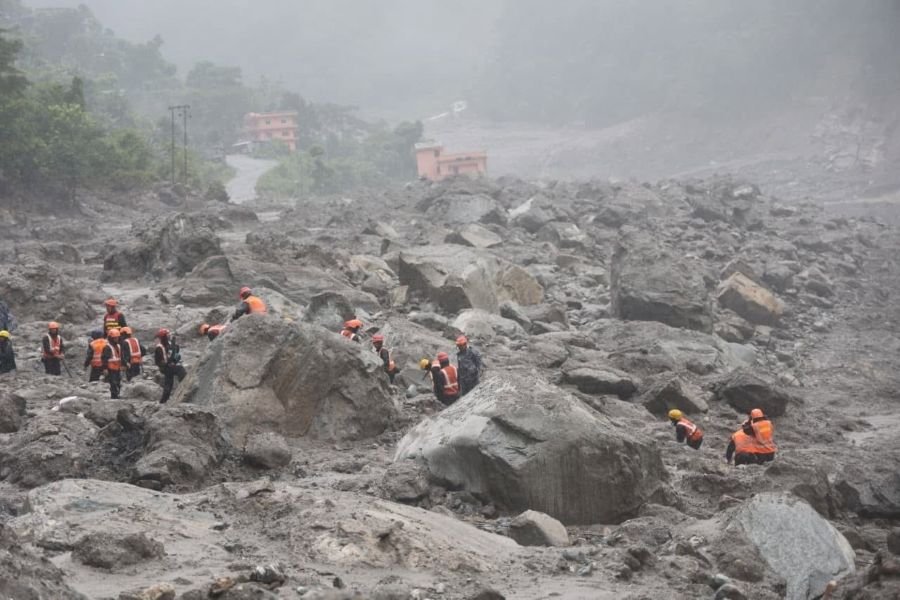
Nepal flash floods: Nature’s Warning To Global Warming
Melting glaciers can feed and enlarge glacial lakes, increasing the potential for sudden floods. As glaciers retreat, mountain rock that was previously insulated and supported by ice becomes exposed to warmer temperatures, rain and repeated freezing and thawing. Permafrost, a ground that has remained frozen for years, can also thaw, weakening rock faces and slopes.


Picture Credit : @PM_nepal_/X
Nepal’s Flash Floods Highlight the Growing Climate Risks Linked to Global Warming
The Hindu Kush Himalaya is warming rapidly, impacting glaciers, snow cover, permafrost and mountain slopes, The mountains contain the largest volume of snow and ice outside the polar regions. More than 63,000 glaciers in the area feed at least 10 major Asian river systems and support the food, water, energy and livelihood security of billions of people. In a warming world, the reports project the loss of up to 50% of all glaciers — excluding those in Greenland and Antarctica — by 2100, even if global warming can be limited to 1.5 degrees Celsius.
The last decade was the hottest multi-year period globally since records began, and 2024 was the warmest year ever recorded. United Nations reports have found that between 2000 and 2019, glaciers lost 267 gigatons of ice per year, roughly equivalent to the mass of 46,500 Great Pyramids of Giza. As per the research by the Kathmandu-based group, it has found that glaciers across these mountains are melting at an accelerating rate, with ice-loss rates doubling since 2000.
Thank you very much, Prime Minister @narendramodi, for your kind call and deep condolences.
We deeply appreciate your warm words of solidarity and your generous offer of assistance to Nepal during this difficult time.
This gesture of solidarity is a reflection of the enduring… https://t.co/VepX2UzxuG
— PMO (@PM_nepal_) August 26, 2026
Deeply grateful to Prime Minister @CMShehbaz and the people of Pakistan for their warm sympathy and solidarity.
We also convey our profound condolences to the families affected by yesterday’s tragic incident at PIMS, Islamabad, and pray for the early recovery of the injured. https://t.co/0f48sH3cTc
— PMO (@PM_nepal_) August 27, 2026
Thank you, Prime Minister @trahmanbnp, for your kind words of sympathy and condolences.
We remain grateful to you, the Government and the people of Bangladesh for standing with us as we respond to this unprecedented tragedy.
Your expression of solidarity reflects our… https://t.co/3s42U5Yd6o
— PMO (@PM_nepal_) August 27, 2026
Melting glaciers can feed and enlarge glacial lakes, increasing the potential for sudden floods. As glaciers retreat, mountain rock that was previously insulated and supported by ice becomes exposed to warmer temperatures, rain and repeated freezing and thawing. Permafrost, a ground that has remained frozen for years, can also thaw, weakening rock faces and slopes.
The kind of cascading hazard behind what happened in Nepal can be a result of an avalanche or glacier collapse that turns into a debris flow, river blockage and devastating flash flood.
Hundreds have lost their homes across the Himalayan region, and officials reported large-scale damage to critical infrastructure, including hydropower dams, roads, buildings and bridges in the region. The landslide was so large it was originally thought to be an earthquake, as the seismic energy registered as a 4.4 magnitude quake on seismographs. By the time it reached Gyirong Port – a China-Nepal border crossing – the wall of debris resembled a tsunami of dirt. Early estimates suggest the wave may have been 30 metres high!
Scientists and other experts have suggested installing early warning systems for villages and towns located near glaciers or thawing permafrost, monitoring rapidly rising river levels, intense rainfall and seismic waves to alert authorities before disaster strikes.
However, installing and maintaining these systems can require significant investment, making it difficult for developing countries. Meanwhile, the Green Climate Fund last year announced funds for better monitoring systems in Nepal.
Rapidly reducing greenhouse gas emissions, investment in early warning systems and better monitoring of vulnerable mountain regions can help communities prepare better for any such catastrophies in future. These measures cannot prevent every disaster, but they can save lives and give people a better chance to adapt to a changing climate.