National
There is also a strong and compelling need to improve accessibility to the highest court of the land. The establishment of a Supreme Court bench in South India would go a long way in ensuring justice – Siddaramaiah, Chief Minister , Karnataka
Speaking at the 22nd Biennial State Level Conference of Judicial Officers with a theme ‘Reimagining the Judiciary in the era of Artificial Intelligence’, he said, the authority of a judge must never be overshadowed by the authority of an algorithm.


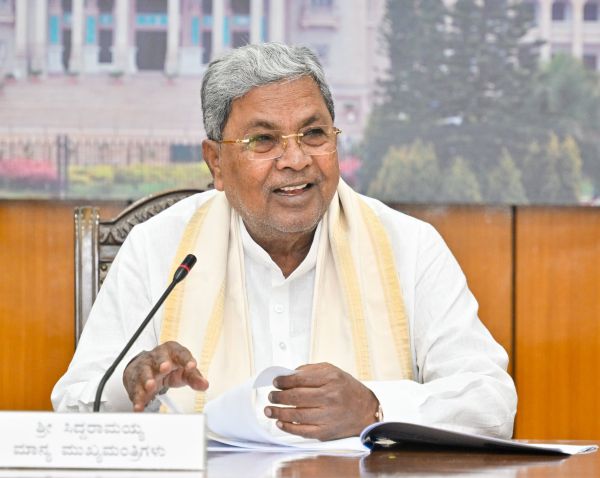
Picture : @siddaramaiah/X
Karnataka Chief Minister Siddaramaiah has stressed the need to improve accessibility to the highest court of the land, asserting that establishing a Supreme Court bench in South India would go a long way in ensuring justice.
Speaking at the 22nd Biennial State Level Conference of Judicial Officers with a theme ‘Reimagining the Judiciary in the era of Artificial Intelligence’, he said, the authority of a judge must never be overshadowed by the authority of an algorithm.
Even as we explore these new frontiers, we must remain mindful of the enduring challenges facing our judiciary,” the chief minister said.
“Pendency of cases continues to be a serious concern that affects the timely delivery of justice. While technology can provide tools to address this, it must be complemented by systemic reforms through strengthening infrastructure, increasing judicial capacity, and modernising court processes,” Siddaramaiah said.
“There is also a strong and compelling need to improve accessibility to the highest court of the land. The establishment of a Supreme Court bench in South India would go a long way in ensuring justice,” he said.
Chief Justice of India, Surya Kant, Supreme Court Judges B V Nagarathna and Aravind Kumar and Chief Justice of High Court of Karnataka Vibhu Bakhru were among those present.
The CM said, “We stand today at a defining juncture where law and technology are no longer separate domains, but interconnected forces shaping governance, rights, and the very nature of justice itself.”
“Artificial Intelligence is emerging as a transformative force that challenges how we interpret evidence, how we understand facts, and how decisions are arrived at. It offers immense promise, aiding faster legal research, improved case management, and the possibility of reducing pendency through intelligent systems,” he said.
“Yet, it also raises profound concerns. Algorithmic bias can undermine the guarantee of equality before law. Opaque systems may weaken the doctrine of reasoned decisions, which lies at the heart of our judicial process,” he added.