National
It is very much part of the Modi government’s calibrated capitulation to a country that was given a clean chit by Mr Modi himself on June 19, 2020 after 20 jawans had been martyred in eastern Ladakh – Jairam Ramesh, On Government’s Relaxing FDI Norms For China
The government has eased foreign direct investment (FDI) norms for China and other countries sharing land borders with India by allowing overseas firms having up to 10 per cent shareholder from these nations to invest in the country without mandatory approval.


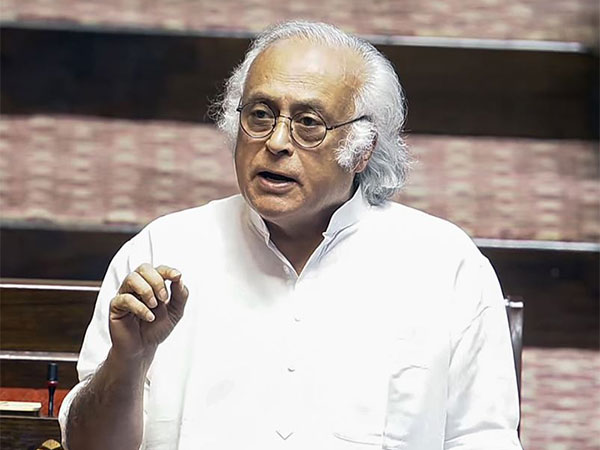
File Picture : ANI/X
The Congress has attacked the Centre for easing the foreign direct investment norms for China, saying it is very much part of the Modi government’s “calibrated capitulation” to that country.
According to PTI, The government has eased foreign direct investment (FDI) norms for China and other countries sharing land borders with India by allowing overseas firms having up to 10 per cent shareholder from these nations to invest in the country without mandatory approval.
Earlier, overseas firms with shareholders from these nations owning even a single share had to seek mandatory approval to invest in India in any sector.
However, other conditions of the FDI norms, including sectoral caps and entry routes, will be applicable to these investments.
The decision of the Modi Govt to relax norms for FDI from China is not surprising. It is very much part of the Modi Govt’s callibrated capitulation to a country that was given a clean chit by Mr. Modi himself on June 19 2020 – after twenty jawans had been martyred in Eastern…
— Jairam Ramesh (@Jairam_Ramesh) March 10, 2026
Reacting to the development, Congress general secretary in charge of communications, Jairam Ramesh, said, “The decision of the Modi government to relax norms for FDI from China is not surprising. It is very much part of the Modi government’s calibrated capitulation to a country that was given a clean chit by Mr Modi himself on June 19, 2020 after 20 jawans had been martyred in eastern Ladakh.”
“Sino-Indian ties are being normalised on Chinese terms, even as India’s trade deficit in 2025 reached a record high of over USD 115 billion,” Ramesh said.
The Modi government has also accepted the loss of patrolling rights in Ladakh’s Depsang, Demchok, and Chumar, he alleged.
The decision to ease FDI norms was taken at a meeting of the Union Cabinet chaired by Prime Minister Narendra Modi.
The amendment in the press note provides for a definition and criteria for the determination of ‘Beneficial Ownership’ that is widely used by the investing community, under the Prevention of Money Laundering Rules, 2003.
The beneficial ownership test will be applied at the level of the investor entity.
The ties between India and China nosedived significantly following the fierce clash in the Galwan Valley in June 2020 that marked the most serious military conflict between the two sides in decades.
Following these tensions, India banned more than 200 Chinese mobile apps such as TikTok, WeChat, and Alibaba’s UC browser.
India also rejected a major investment proposal from Chinese electric vehicle maker BYD.
Though India has received minimal FDI from China, the bilateral trade between the two nations has grown multi-fold, with China emerging as the second-largest trading partner of India