Books
City Limits: Crisis of Urbanisation, Edited By Tikender Singh Panwar
Part of the acclaimed Rethinking India series, City Limits brings together essays by leading thinkers, policymakers, planners, and scholars who have spent decades engaging with India’s urban realities on the ground. Collectively, they interrogate the dominant narrative that treats cities merely as engines of economic growth, arguing instead that this model has produced cities that are neither inclusive nor sustainable.

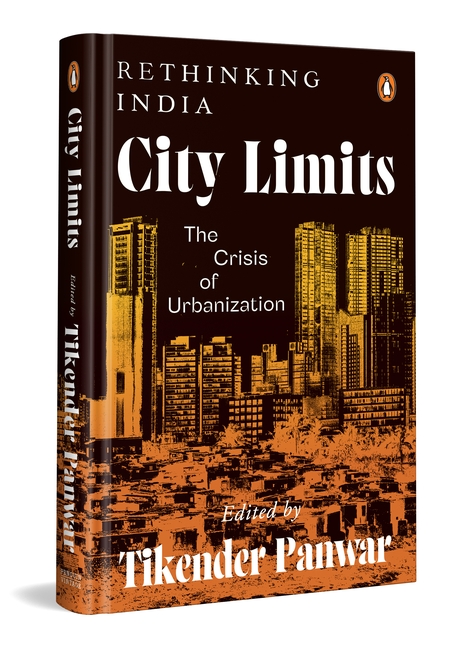

Penguin Random House India is proud to publish City Limits: Crisis of Urbanisation, edited by Tikender Singh Panwar. A timely and urgent intervention that examines how India’s post-1990s urban growth has deepened inequality, strained ecosystems, and eroded the idea of the city as a shared, democratic space.
Part of the acclaimed Rethinking India series, City Limits brings together essays by leading thinkers, policymakers, planners, and scholars who have spent decades engaging with India’s urban realities on the ground. Collectively, they interrogate the dominant narrative that treats cities merely as engines of economic growth, arguing instead that this model has produced cities that are neither inclusive nor sustainable.
The book traces the emergence of the “neoliberal city” following liberalisation, showing how the retreat of the welfare state and the commodification of public goods such as housing, water, transport, and healthcare have resulted in a silent transfer of wealth from the poor to the affluent. The one who form the backbone of India’s city economies – migrant workers, informal labourers, and the urban homeless – remain systematically excluded from policy frameworks, governance structures, and planning processes.
City Limits also critically examines contemporary urban policy regimes, including Smart Cities, public-private partnerships, and digital governance models. While often framed as solutions, these initiatives frequently deepen exclusion, weaken democratic accountability, and convert cities into sites of extraction for corporate and digital capital. The book introduces the idea of the Right to the City as a counter-vision, calling for democratic control over urban resources, protection of urban commons, and a reimagining of cities as collective habitats rather than profit-driven enclaves.
About The Author
Tikender Singh Panwar is a policymaker, urban thinker, and former elected Deputy Mayor with extensive experience in city governance. His work bridges theory and practice, shaped by years of engagement with urban workers, migrants, planners, and administrators. A regular contributor to leading national publications, Panwar brings a grounded, Indian perspective to debates on urbanisation, sustainability, and social justice.
The official release for the book is in December 2025