Books
Booker Prize Winner Julian Barnes’s Final Novel Departure(s)
Unmistakably metafictional, deeply moving, and quietly devastating, Departure(s) revisits themes that have long defined the author’s work, love, loss, time, and the slipperiness of truth, but with a new and piercing clarity. This is not a book about endings alone; it is about happiness, about companionship, about knowing when to hold on and when to let go.

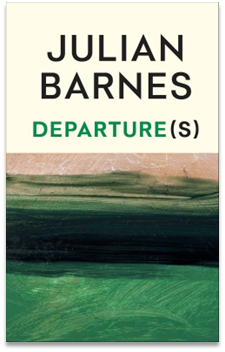

From the Booker Prize–winning, Sunday Times bestselling author comes Departure(s), a final work of fiction that feels less like an ending and more like a distillation of a lifetime of thought, love, and literary precision.
Departure(s) is fiction. But it is fiction steeped in truth.
‘At a little over 150 pages, Departure(s) is brief but it is not slight and, each time I read it, I thought about it for days afterwards …’ Financial Times
‘Barnes at his most irresistible… [Departure(s) is] a perfect send-off’ The Times
‘A moving, engaging book… his [Barnes’s] humorous narrative explores the effect of time on love… a rather lovely swansong’ Independent
At its heart are Stephen and Jean, who fall in love when they are young, and again when they are old, discovering that time does not diminish feeling so much as refine it. There is Jimmy, an elderly Jack Russell, blissfully unaware of mortality, reminding us how instinct can sometimes outpace philosophy. And there is the author himself, quietly present in every question the book dares to ask.
Beginning at the end of life, Departure(s) is a meditation on what remains when the body falters, through age, illness, accident, or choice. It asks how memory works: how lived experience softens into anecdote, anecdote into recollection, and recollection into something that may or may not be factually true, but remains emotionally essential. Does it matter if memory is accurate, or only that it mattered enough to survive?
Unmistakably metafictional, deeply moving, and quietly devastating, Departure(s) revisits themes that have long defined the author’s work, love, loss, time, and the slipperiness of truth, but with a new and piercing clarity. This is not a book about endings alone; it is about happiness, about companionship, about knowing when to hold on and when to let go.
Critics have recognised the novel as a fitting, even triumphant farewell. The Times calls it “an elegant, thoughtful final book,” while The Daily Telegraph hails it as “one of his best.” The Observer notes it as “metafictional, moving, unmistakably Barnes,” and the Financial Times affirms that the author has “given his career a triumphant ending.”
Departure(s) does not seek to sum up a career, it simply illuminates it. Tender without sentimentality, philosophical without heaviness, this final book reminds us why its author has long been considered one of the finest writers of our time.
It begins at the end of life, but it does not end there.