Books
Book Review : How Race Continues To Shape the World
The book takes readers through nearly five centuries of history. Mohamed begins with the period of European exploration, including Christopher Columbus’s voyage aboard the Santa Maria, and goes on to discuss slavery, European imperialism and colonialism. He then connects these historical developments to issues in the modern world.


A Thought-Provoking Review of How Race Continues to Influence Society and the World
What if race is not simply a part of our colonial past, but something that continues to influence the world we live in today?
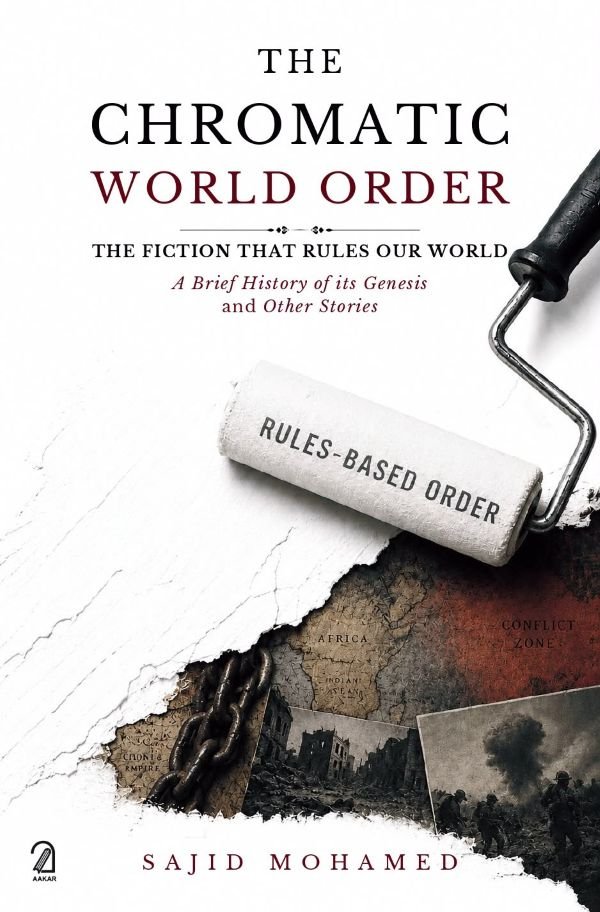
This is the central question explored by Sajid Mohamed in The Chromatic World Order: The Fiction That Rules Our World. The book looks at the long history of race and examines how ideas of racial superiority have influenced colonialism, international relations, geopolitics and inequality.
Mohamed’s main argument is that the end of colonial rule did not necessarily mean the end of the racial ideas that supported colonialism. While countries gained independence and the world formally moved towards equality, many of the old ideas and structures, he argues, continued in different forms.
The book takes readers through nearly five centuries of history. Mohamed begins with the period of European exploration, including Christopher Columbus’s voyage aboard the Santa Maria, and goes on to discuss slavery, European imperialism and colonialism. He then connects these historical developments to issues in the modern world.
One of the interesting aspects of the book is the way Mohamed connects events from very different periods. The transatlantic slave trade, for example, is discussed alongside the 2023 Adriana migrant tragedy. Similarly, the history of colonialism is connected to contemporary issues such as the War on Terror and conflicts in Gaza and Iran.
Through these examples, the author asks an important question: have the ideas that created racial hierarchies really disappeared, or have they simply taken new forms?
For Mohamed, race is not only about prejudice or discrimination between individuals. It is also about systems of power. He argues that racial ideas have influenced the way societies understand concepts such as civilisation, development, security and even human worth.
This argument becomes particularly important when the book discusses the modern international order. The world today often speaks about equality between nations and a rules-based international system. Mohamed asks readers to look at how that system was created and whether its history of European dominance continues to influence it.
The book is also concerned with the relationship between race and class. Economic inequality is often explained through differences in wealth and class. Mohamed argues that this explanation is not enough. Race, he says, can determine how different communities are treated and can make some people appear less deserving of dignity, sympathy or protection.
In this sense, racial discrimination does more than create inequality. It can also lead to dehumanisation.
This is one of the book’s key arguments. Mohamed suggests that race and class should not be seen as competing explanations. Both can work together, along with gender and other forms of inequality, to create systems of domination.
The author’s background as a practising lawyer also influences the way he looks at these questions. He is interested in the relationship between ideas, institutions and laws. The book asks whether laws and international rules that appear universal and neutral can always be separated from the history and power structures in which they developed.
Mohamed also brings a perspective shaped by the experience of a formerly colonised society. Instead of looking at world history only from the viewpoint of Western powers, he encourages readers to consider how the same history might look from the perspective of countries and communities that experienced colonialism.
His reference to Immanuel Kant is particularly interesting. Mohamed imagines a world in which Kant had not “taken sides”, using the idea to question how Western political thought has influenced the way the modern world understands itself.
The book is strongly critical of Western power and its role in shaping the global order. Some readers may find some of Mohamed’s arguments provocative, especially when he connects historical racial hierarchies with present-day international conflicts. But this is also what makes the book relevant. It encourages readers to question ideas that are often taken for granted.
One of the book’s biggest strengths is its attempt to connect history with the present. Colonialism is not presented as something that simply ended when countries became independent. Instead, Mohamed asks readers to consider how its ideas and structures may still influence politics, economics and international relations.
The title, The Chromatic World Order, refers to the central idea of the book — that race may be a social construction, but its consequences are very real. Even if racial categories are created by societies, they can influence who has power, who receives opportunities and whose suffering receives attention.
The book is therefore not just about the history of racism. It is about the way history continues to influence the present.
The Chromatic World Order raises difficult questions about colonialism, race, power and inequality. Readers may agree with some of Mohamed’s arguments and question others, but the book encourages an important conversation about the world we live in.
At a time when issues of migration, war, racism and global inequality continue to dominate international debates, Mohamed’s argument remains relevant. The book asks us to look beyond the formal end of colonialism and examine whether the ideas that supported racial hierarchy have truly disappeared.
Ultimately, The Chromatic World Order invites readers to reconsider the making of the modern world and to ask a simple but important question: if race helped shape the world order of the past, how much does it continue to shape the world order of today?