Books
All Our Tomorrows Durjoy Datta
At its heart, All Our Tomorrows asks an extraordinarily familiar Indian question: how much of our parents’ dreams are we obligated to inherit? Datta places the intimate dramas of marriage, parenthood, friendship and first love against some of the country’s defining transformations—from the Licence Raj and the 1991 reforms to the rise of outsourcing, migration and the digital age

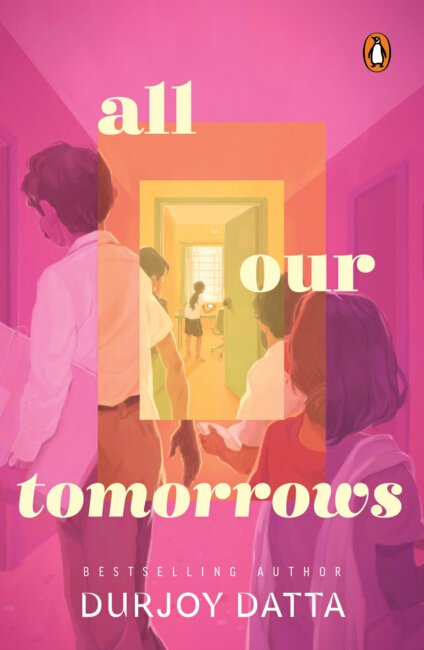

Across 1991, 2001 and 2020, one family discovers that the future they fought for may not be the future their children choose
What happens when a country changes faster than the families living through that change? In All Our Tomorrows, bestselling author Durjoy Datta tells an ambitious, deeply intimate story of one Indian family across three transformative decades. Beginning in 1991, as India stands on the brink of economic liberalisation, moving through the aspirational new economy of 2001, and arriving in the uncertainty of 2020, the novel follows the Mazumdar family as their ideas of success, love, duty and belonging are repeatedly rewritten. In 1991, Indranil and Sayantani are a young middle-class couple dreaming of a telephone, a better career and greater possibilities for their children; as India opens its economy, they begin to imagine that perhaps their own lives can open up too.
A decade later, their son Abir comes of age in a very different India: call centres are booming, young Indians are acquiring new accents, new jobs and new ambitions, and America feels simultaneously closer and more desirable than ever. His meeting with Veda, a fiercely independent young woman determined to build a life on her own terms, becomes both a love story and a collision between two ideas of India—one that believes in staying and building, and another that dreams of leaving. By 2020, Abir’s teenage daughter Mira belongs to yet another India: smartphones, social media and limitless possibilities are ordinary to her, even as the pandemic suddenly confines three generations under one roof and forces the family to confront the choices, resentments and sacrifices that made their present possible.
At its heart, All Our Tomorrows asks an extraordinarily familiar Indian question: how much of our parents’ dreams are we obligated to inherit? Datta places the intimate dramas of marriage, parenthood, friendship and first love against some of the country’s defining transformations—from the Licence Raj and the 1991 reforms to the rise of outsourcing, migration and the digital age. The result is a novel in which history is experienced not through headlines but through ordinary things: a family selling gold, the arrival of a telephone, a young man taking a call-centre job, the desire for a foreign passport, and eventually a teenager receiving an iPhone. The India that once made Indranil and Sayantani fight for every possibility becomes the India in which their granddaughter takes possibility for granted—and yet every generation discovers that progress creates new freedoms without necessarily making love, family or belonging any simpler. All Our Tomorrows
With All Our Tomorrows, Durjoy Datta, one of India’s most widely read contemporary popular-fiction writers, expands the canvas of the love story into something larger: a family saga about the making of modern India and the people who lived through its transformation. Warm, funny, messy and deeply emotional, the novel captures parents who sacrifice too much, children who want lives their parents cannot understand, marriages stretched across countries, friendships that survive decades, and a family continually trying to answer the same question in different eras: what do we owe the people we love—and how much of ourselves can we give them without giving up the future we want?